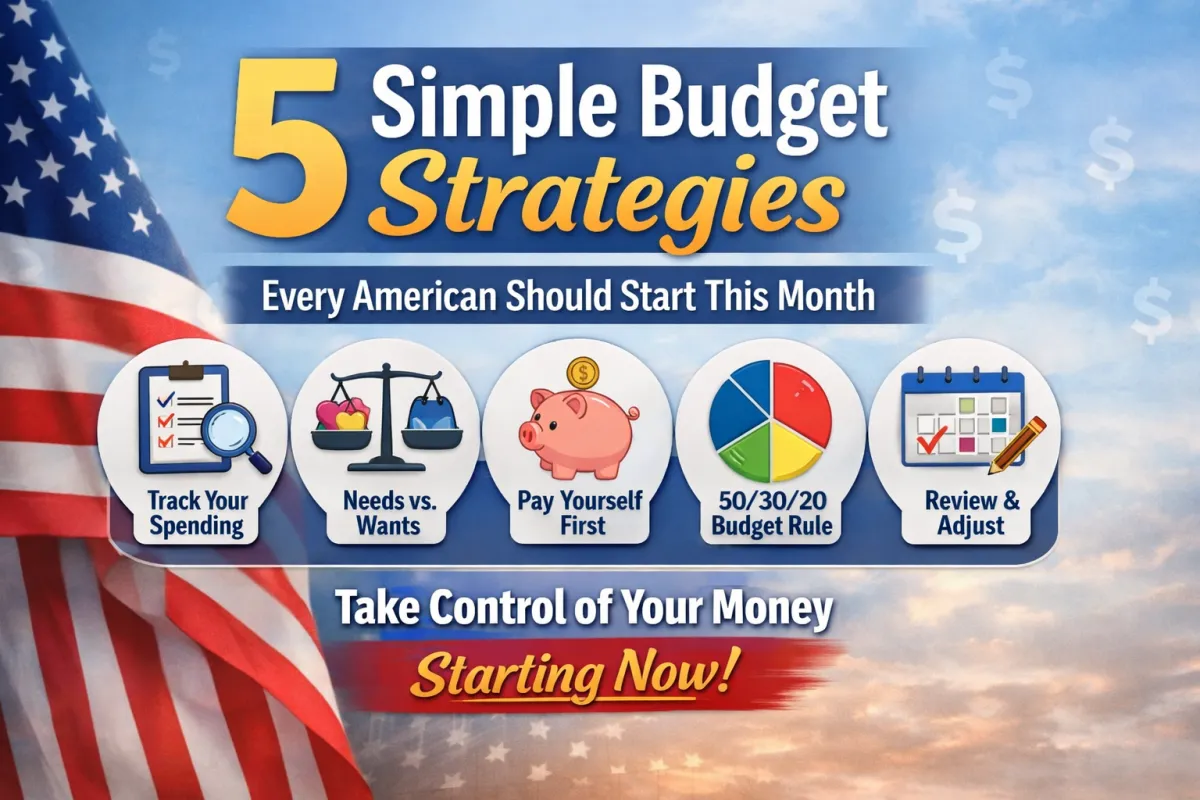
5 Simple Budget Strategies Every American Should Start This Month

Budgeting doesn’t have to be complicated or restrictive. You don’t need a six-figure income or a finance app you’ll never open again. What you need is a simple plan that helps you stay in control of your money—no matter your income level.
If you’ve ever wondered where your paycheck went or felt stressed about bills, these practical budgeting strategies can help you start building better money habits this month.
1. Track Your Spending for 30 Days
The first step to better budgeting is awareness. Many people underestimate how much they spend on small, everyday purchases.
For one month, track every expense, including:
Housing and utilities
Groceries and dining out
Transportation and gas
Subscriptions and streaming services
Online shopping and impulse buys
💡 Tip: Coffee runs, food delivery, and convenience purchases add up quickly. Seeing the numbers clearly can be eye-opening—and empowering.
2. Clearly Define Needs vs. Wants
A strong budget starts with knowing what’s essential.
Needs may include:
Rent or mortgage
Utilities
Groceries
Transportation
Insurance and minimum debt payments
Wants may include:
Eating out frequently
Entertainment and shopping
Premium subscriptions
Non-essential upgrades
This doesn’t mean cutting out fun completely. It means making sure your essentials are covered first—without guilt.
3. Pay Yourself First
Saving should happen before spending—not whatever is left over at the end of the month.
Try this approach:
Automatically transfer money to savings as soon as you get paid
Start small if needed—$25 or $50 per paycheck is still progress
Treat savings like a non-negotiable bill
💡 Even small, consistent contributions can help build an emergency fund over time.
4. Use a Simple Budgeting Framework
You don’t need a complicated system. Many people find success with the 50-30-20 rule:
50% for needs
30% for wants
20% for savings and debt repayment
If those percentages don’t work for your situation, adjust them. The goal is to create a budget that’s realistic and sustainable—not perfect.
5. Review and Adjust Monthly
Life changes—and your budget should too.
At the end of each month:
Review your spending
Identify areas to improve
Adjust categories as needed
Regular check-ins help you stay proactive and confident with your finances instead of reactive and stressed.
Final Thoughts
Budgeting isn’t about restricting your lifestyle—it’s about creating freedom and peace of mind. When you give your money a plan, you gain clarity, control, and confidence in your financial future.
If you want personalized guidance or a financial plan that aligns with your goals, working with a trusted financial professional can make a big difference.
📩 Ready to take the next step toward financial stability?
Visit Pinnacle Financial Services to learn how professional financial planning can help you move forward with confidence.

